
By early March 2020, all leaders across the globe were for once “equalized” and were all glaring at the same reality check of life-changing events– that an “invisible”, unpredictable, highly contagious, deadly and dangerous enemy(COVID19) was fast approaching and spreading in a fast and furious way that they themselves in their “own might” could not control. Even with an aggressive public policy responses in China the virus still managed to spread to other parts of the world…including Africa where initially some hilarious comical Africans were making fun of how their “popping melanin goodness” would indeed scare if not defeat Coronavirus. Oh gracious me, isn’t it funny how human beings find humor even in very serious, scary life threatening issues. But the question here is so what did global leaders of organizations, cities, states, countries faced by such an unprecedented crisis leadership test of our times do differently?
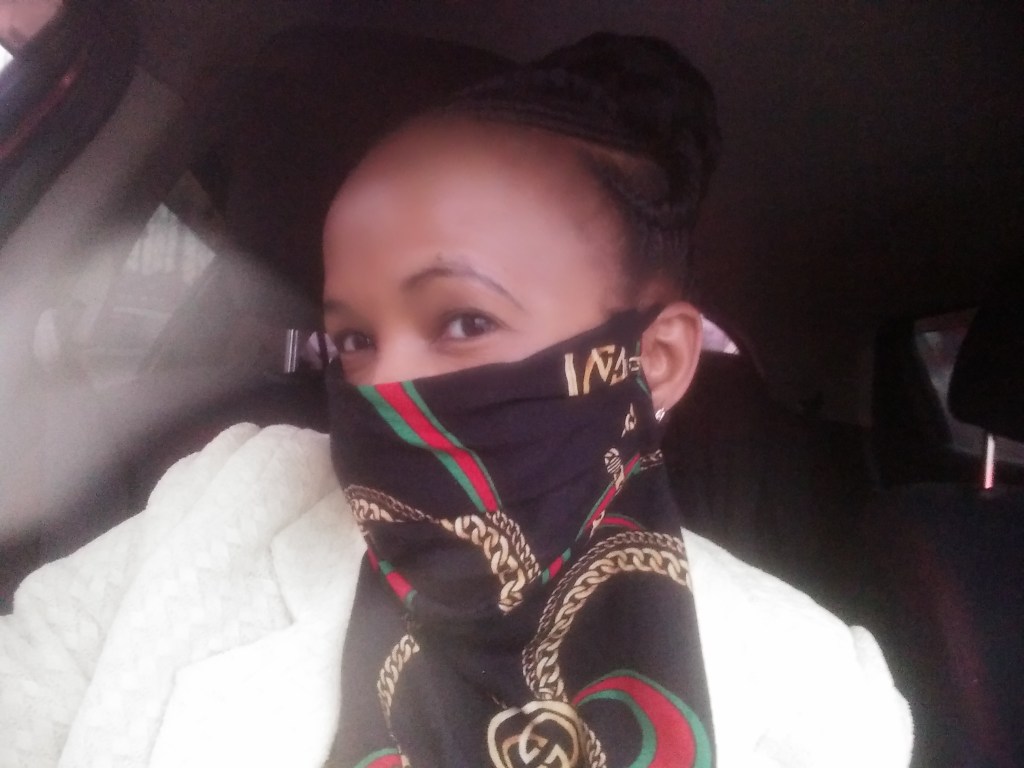
And how did they prepare and respond to this unstoppable enemy because the one unique thing about this enemy unlike other disasters that we have faced before (terrorism, floods, famine, earthquakes, locusts) COVID-19 did not discriminate of any ages, race, continent, countries, gender, religious backgrounds? This is despite the fact that Women sadly make up only 7 % of all heads of states globally; which is heartbreaking in 21st century. Whether we like it or not, the one sobering fact we cannot pretend not to acknowledge or notice with concern is that the global leaders that passed the test with flying colors for that matter are disproportionately Women leaders.
In a way, COVID-19 global mega crisis moment in world’s history offers us as leaders a fascinating and real-time opportunity to understand the consequences of leadership decisions in a high-stakes situation. And this comes down to when governments enforced physical and social distancing directives on the ground. I particularly loved Trish Barrett’s sentiments; (a healthcare executive with 25 years in infectious disease control and 19 years in supply chain and emergency management) who stated that “If you really want to understand an apples-to-apples comparison of whether or not communities have been effective in slowing the spread, you have to look at three statistics. The number of new cases per week, the number of cases per 100,000 people, and the rate at which number of cases per capita doubles.” Since this is a highly debatable topic to analyze, it turns out that when you look at the data that way and three factors emerge as having a significant impact on the spread of this deadly coronavirus disease, and ultimately leading to deaths: a) population density, b) exposure to those who traveled, and c) the date when everything was shut down. Obviously the first two cannot really be influenced by any leader, but the shut-down dates is directly related to actions taken by leaders. Indeed, the number of COVID-related deaths is predicted to be substantially lower in areas where leaders acted sooner even by a week. Barrett further states that “Cities, states and countries that implemented a clear, thorough and well-executed social and physical distancing plan at least a week before their first death had radically and significantly different outcome. By so doing they flattened the curve and significantly controlled the spread and prevented new cases.” I noted with excitement that Women led countries like Germany, New Zealand, Iceland and Finland (all with women leaders) fall into this category. Some states like California, which also acted relatively quickly, the mayor of San Francisco, one beautiful madam London Breed (the first black woman to ever hold that mayor’s office) took fast action days before the governor of California and the mayor of Los Angeles (both men) did.
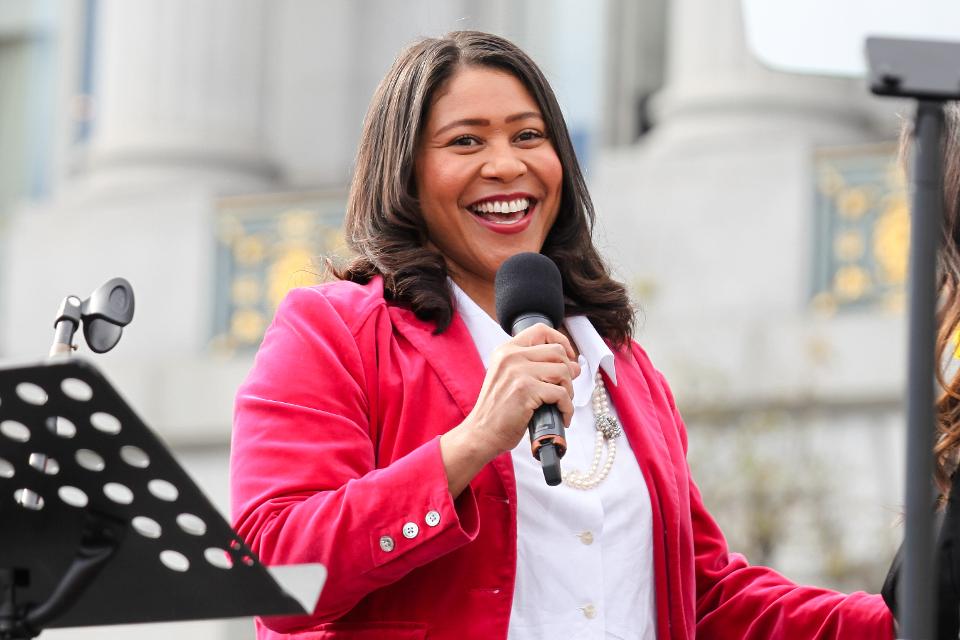
So these women leaders acted first and made the tough calls and very unpopular move to shut down cities, businesses as they knew it in the face of a truly invisible deadly virus that has no known cure. For those of us who have been lucky to visit California and these other vibrant cities “full of life” you know it takes a lot of guts and real work to shut down such cities! I sought to understand what we could all learn beyond the usual tropes of women being more emotionally intelligent and motherly. And mind you make no mistake, i didn’t think this could be entirely chalked up to their people skills, ability to engender trust and communicate empathetically. It’s not by accident that these women leaders successfully saved lifes and this explains the reason I passionately write this article to lobby and advocate more leaders to include women in their decision making tables.
Let’s for once be brutally honest with ourselves! In any crisis such as war, terrorism or famine won’t you all agree that women are hardest hit? This is obviously the case with the current deadly Coronavirus pandemic which has heavy psychological, social and economic impacts on Women. Even if we consider beyond COVID-19 direct infections, women’s health and safety are at greater risk due to the increased domestic violence and significant abuse which has been reported in recent weeks due to the total lockdowns in some cities, physical isolation, social distancing directives to contain the spread, as well as sexual and reproductive health services access reduction.
Women are borne to naturally nurture so they face an increased burden of care of immediate family members, aging parents and subsequent risk of getting sick themselves in such unprecedented crisis. Women also represent the majority of front-line healthcare workers and caregivers in their respective homes and communities’ globally. This is a disproportionate indirect impact of the pandemic on women’s livelihoods everywhere and with the majority of women working in the informal sector economy who earn a daily living of less than a dollar a day, majority lack health insurance and social security, putting them further at a disadvantaged risk. While women make up 70% of the world’s healthcare workers and are overall more vulnerable in times of any crisis, sadly they only make up of about 25% of legislators and only 6% of state and government leaders. Ironically emergency response taskforces around the worlds are overwhelmingly male-dominated, as seen for instance in Europe and in the United States of America. To make matters worse, traditionally we have very few women in the media to offer professional expertise on relief and recovery responses.
And since we just recently rang the Gender Bell on March 13th 2020-thanks to Nairobi Stock Exchange (NSE) for hosting us to such a noble initiative, UN Global Compact Network Kenya, UN Women and International Finance Corporation and other awesome “agents of change” for mobilizing to have “C-suite high level dialogue on Gender Equality” where we Kenyan leaders in different sectors passionately rung the bell for gender parity in line with the global International Women’s Day 2020 theme dubbed #EachForEqual.
I recall vividly how Nairobi Stock Exchange CEO Mr Jeffrey Odundo passionately rallied male leaders to include more women in their Boards-and with the unified voice that all global stock exchanges add to advocating for equal gender representation on company boards and in senior management as a smart business strategy.
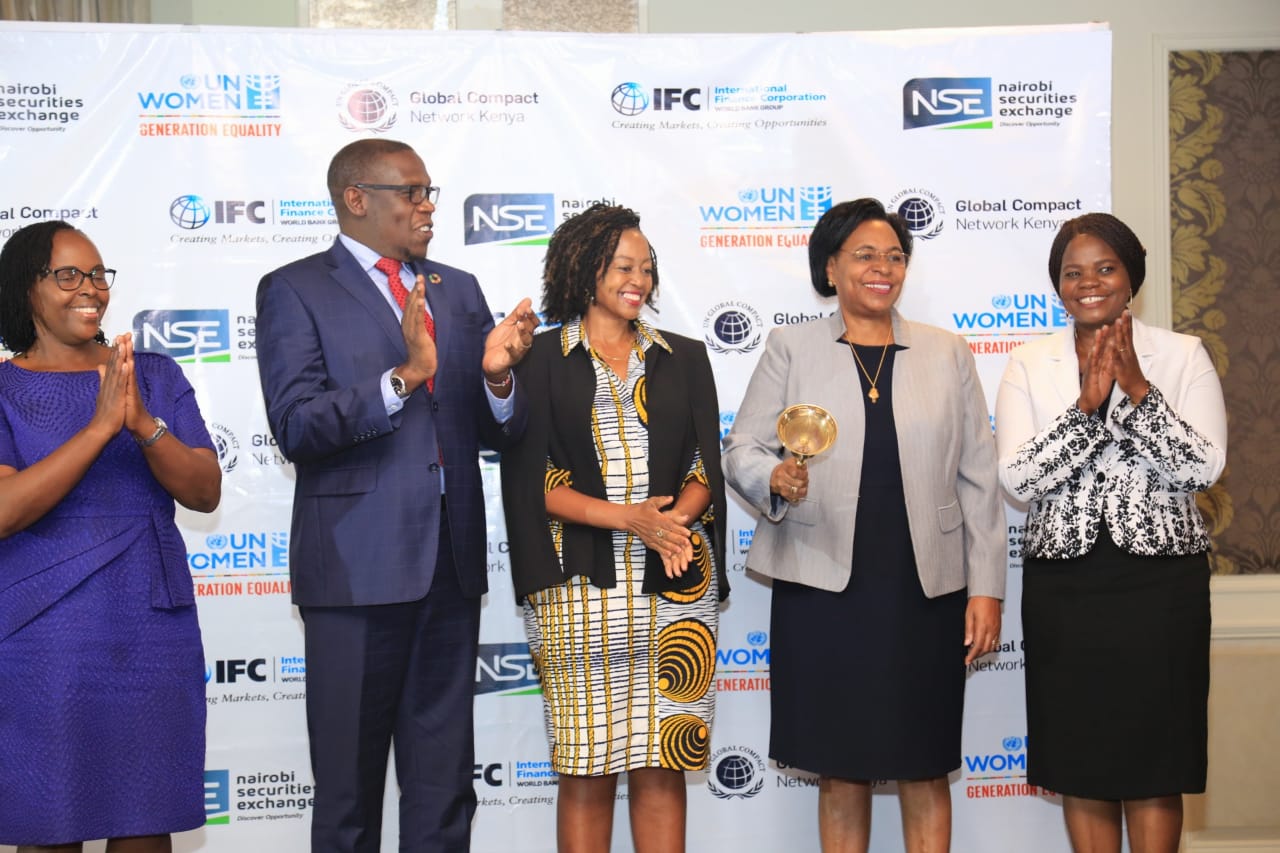
Listening to Mrs Rose Lumumba from International Finance Corporation (my “twin sister” one of fearless female leaders i know- in matters passionate, impactful, purpose- driven- results-oriented gender agenda) during the 2020 gender bell for me was sweet melody to my ears. She started her key note speech by stating that “it is of mission critical importance to have women on boards, women in political and business leadership.” She also shared some well researched mind boggling statistics from International Finance Corporation (IFC) which indicated that sadly women hold only 16.9 percent of board seats globally, only 4.4 percent of global CEO and 5.3 percent board chair positions, and 12.7 percent of global CFO positions. Isn’t it heartbreaking in the 21st century? Since 2016, US companies that have gone public with at least one female board director outperformed companies that had none, one-year post-IPO, according to Goldman Sachs research. This correlation with financial performance is stronger when women comprise a critical mass of about 30 percent of a company’s board. IFC research also demonstrated that listed companies with women directors on their boards outperform those without. Gender is a priority for IFC, and it’s aligned with their mission to drive sustainable and inclusive private sector-led investment in developing countries, creating markets and opportunities for all. As investors IFC understands the value of accelerating the pace of women ascending to board and senior leadership positions and highlights tangible steps that all businesses can take to bolster gender equality. IFC research also highlighted that correcting gender imbalances could lead to important economic, environmental, social, and governance gains in emerging and frontier markets.
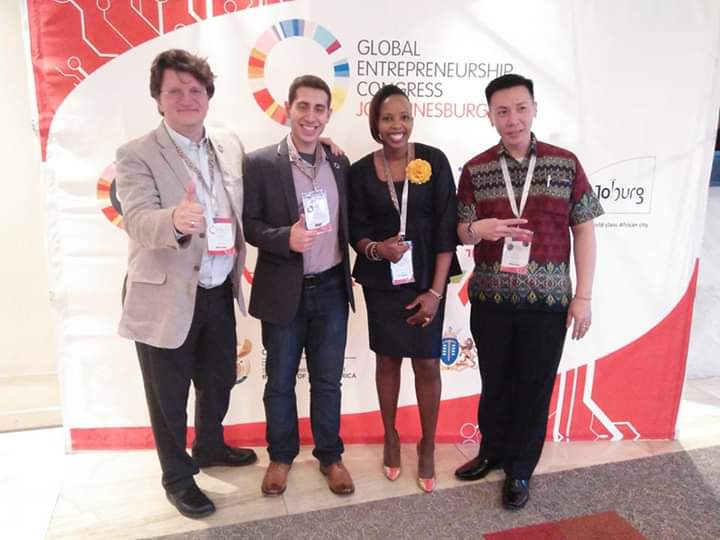
However full representation of the population we lead matters most especially in times of crisis. The ways we respond to the pandemic and its ramifications must challenge democratic institutions in an unprecedented way if the appropriate steps are not taken. With elections being postponed or remote e-voting anticipated even after COVID-19, parliaments closing or online policy deliberations, and traditional print media spaces reduced, women’s voices might be further silenced as gender equality issues often sadly “conveniently” get moved to the back burner. We must include gender-parity perspectives in all decision making processes in government across all sectors to ensure an optimal relief and recovery response without compromising women’s safety and rights hence jeopardizing everyone’s welfare. Gender-sensitive policies that recognize and respond to women’s needs will benefit not just women but society at large. I know I am unapologetically guilty as charged for quoting this phrase often but it’s a fact “when you empower a woman economically-socially-financially, it leads to a happier empowered family unit, which results to safer healthier more community, a better happier healthy nation and of course a better safer productive world”.
More than ever, this crisis has shown that people’s safety and wellbeing is determined by key decision makers, both elected and unelected and we are now more than ever all as vulnerable as the most vulnerable among us. With nearly two million COVID-19 cases and over one hundred thousand deaths deplored, the stakes are too high to ignore women’s voices and the perspectives and resources they bring to the decision making table. The intention of this article is to raise much needed awareness about the lack of women’s leadership and representation in relief and recovery decision-making and on the importance of incorporating gender-sensitive responses during and after the crisis. I invite both women and men in corporate leadership, politics, civil society activists, practitioners and researchers to join this gender-diversity movement.
Like I highlighted in my diversity and inclusion articles last week, we must ask ourselves difficult questions as well as acknowledge that Female leaders:-
Do not suffer from overconfidence-they instead collaborate seeking diverse inputs and often listen
A study by Therese Houston found that, “71% of men reported that they thought they were smarter than the average American, with only 57% of women saying the same…there is plenty of research to show men are more likely to trust their own judgment and instincts when making decisions.” In yet another study, men expressed confidence in their ability to excel as leaders, even when they change sectors and their resume is clearly not aligned with the new industry. Unlike men women are more likely to cultivate a diverse set of advisors and a “wide network” to help them succeed and more likely to pay top-dollar for professional advice and to follow it. This explains why we have many women coaching and mentoring.
Sadly female leaders are more likely to be harshly blamed if decisions are unpopular or ineffective. Women are questioned and “second-guessed” more frequently and harshly which is quite annoying if you ask because I have been there done that! And for these reasons, female leaders know they need more “cover” than men. The instinct to seek advice and listen isn’t entirely because of the need for input, it’s also because people are more likely to accept decisions from women when they don’t stand alone. And I bet if you looked at the pictures of women making announcements right now, they have more people behind them-casing point of our Kenyan health sector space. And regardless of the reason, the ability to know what you don’t know and to listen to people with expert knowledge has clearly served women well right now. Several trailblazing women have indeed explicitly mentioned listening keenly to experts and as they managing the next phase of the crisis. As we all know the only way to save lives is to skillfully act upon the advice of those who truly have the data driven expertise of the evolving science behind the crisis.
Rank higher not just on people-orientation, but also in vision-setting
A study by McKinsey on the essential characteristics of leadership which set out to determine the tendencies of men and women under normal circumstances, and in times of crisis –found that Women are indeed more “people-oriented”—and spend more time developing and coaching other leaders in their organization. Many such studies have shown that women are more focused on building community and teams. Though Sara Laschever (a female coach) found that women unfortunately struggle in negotiating for themselves on topics such as salary and career advancement. She found out that women excel when they negotiate on behalf of “general welfare” or the “common good.” Several gender experts pointed out that it is impossible to know if women are naturally more community-minded or if they have been socialized to know what society expects of them and what is required of them to lead. But either way, unleashing collective potential is a very critical leadership skill. In the same McKinsey study, organizations with more than three women in the C-suite scored higher on employee survey questions about “direction” and “innovation.” Women tend to display (statistically more than their male counterparts) two things during and after a crisis. The first was “expectations and rewards” by defining roles, clarifying expectations, and rewarding achievement targets. The second was “inspiration” by painting and offering a compelling realistic vision of the future and an optimistic implementation plan. “Women are just as decisive as men despite stereotypes reflecting otherwise.” Women also score higher than men on “task orientation” and in solving problems in creative and flexible ways. Women therefore possess the qualities of transformational leaders—vision, inspiration, direction-setting and out-of-the-box thinking—though sadly more often the media in recent press only focused on the softer skills of how they lead. Being “other-directed” and feeling a sense of total commitment to the common good has thankfully been a key driver in women’s willingness to be out front during this crisis. I have also been super impressed with the competence and courage so many of us female leaders display in times of crisis. So much has been said, for example, about the “children’s press conference” by the Prime Minister of Norway and what it said about her emotional intelligence. But, so little has been said about her visionary multilateral cooperation plans and the well-executed measures she has taken to stop the spread….and this is why we need more women in media sectors to cover such positive dare-devil stories occurring to help other leaders learn from it.
See and manage risk differently than their male counterparts
Journalists in last few weeks have rightly written quite a bit about the costs of grossly incompetent federal responses, in especially United States of America and England that I do not wish to get into. The two countries run by “egotistic” men who downplayed the risks of this deadly virus until it was too late and I remember for a long time Mr Donald Trumph was even referring to Coronavirus as the “Chinese flu” (which is still beyond me) and downplaying the magnitude of the seriousness he needed to take in his crisis management leadership skills and sadly as we all know it his careless risk management skills has costed America thousands of deaths of innocent lifes to this deadly virus. A famous study conducted in 1994 by Gallop caused heated airwaves by identifying what is now referred to as the “white male effect.” It turned out that white men perceive the risks of health and technology hazards as low compared to women and people of color. This inability to see risk has had dire consequences in the tech industry—run largely by white men—who failed to predict or plan for breaches in cyber security to disastrous effects. Gallop speculated that this is because “Women, people of color, the disabled wake up to risk every single day so they have to see it. Women are at risk everyday so we see it differently, assess it differently, and act in the face of it differently.” In a recent study conducted, scientists observed the cortisol levels of men and women in response to physical stress and asked them to respond to different scenarios. Men were much more likely to fight back and to choose more risky pathways in the face of stress, whereas women were less likely to experience big changes at all. In the face of risk, women are more likely to make data-driven, sure-bet decisions as opposed to risky ones where the downsides are big and unknown. This body of research is often summarized in the following manner: Women are less likely to take risks during a crisis than men. I struggled with this concept in the context of leadership and COVID-19. It strikes me as incredibly risky and bold that the beautiful California Mayor Breed, for example, a young black woman, shut down the city before there were many confirmed cases and no confirmed deaths and before either the state or federal government had acted.
Often face the ‘Glass ceiling Cliff,’ and figure they might as well jump it
For years now, the irony of most research discussed that women are more likely to get their shot at being the big boss when there is a crisis. They are also more likely to be blamed for the crisis (even if it started long before their term in office) and to be criticized if there are negative consequences during a crisis (even if those consequences are inevitable or beyond their control). This is obviously not true of men leaders. Shrewd researchers calls this the “glass cliff” and i sympathize with many female leaders about the “no-win nature” of navigating this catch-22 and i sometimes feel like one of my fellow writer Oliver once said “perhaps women know they are damned if they do something and damned if they don’t, so they just choose to do the right thing.” And being the hot target of opposition and the victim of implicit biases could be an advantage right now because we know from research that women are less driven by self-interest but also maybe they know they have less to lose. It make me wonder if women, consciously or unconsciously, know they can’t win in the court of public opinion, and this frees them up to do the right thing. I tend to think that women leaders are doing extremely well during this crisis because what they are doing is simply negotiating for the “common good of everyone” unlike men- which is aligned with what women are naturally gifted to do socially and what people expect from them.
Women are not only vastly underrepresented but face enormous obstacles to leading in almost every sector, including the leadership of major Fortune 500 companies, cities, counties and states and countries. If we can be honest with ourselves as leaders, let’s allow COVID-19 to cause us all as “agents of change” to be concerned that we don’t have our best leaders running things, which is that we must all accord women in more leadership and decision making positions. I urge us all to support, accord this gender parity agenda the same magnitude of urgency importance and quickly adopt it with the same level of swiftness that we have all quickly adopted to e-meetings (zoom webinars), going cashless, digital operations and working from home! Unlike what anti-gender stereotypes want us all to believe, women can display a host of very unique leadership skills that are not at all limited to the things we have been “cultured” to hear from people before us. The story of coronavirus spread and unthinkable human tragedies is the ultimate case gender parity study in high-stakes leadership. All leaders, including men, can learn from what we have seen women do in this mega crisis. I urge anyone in a position to rethink the majority male C-suites and board rooms in their organization to deliberately and actively include qualified women leaders based on merit (not looks nor how large their curves are) because that’s what fearless leadership is all about. As much as majority of the time most people think of gender diversity as being about representation, but COVID-19 has clearly showed us that gender diversity is clearly about bold decision making, high-quality, life-saving, leadership. As I pen off let me challenge you as a fearless leader in your space to take a hard look and answer below questions:-
What can be done by governments, parliaments, civil society, private sector players and the media to ensure women’s voices are included more and actively involved?
Are women leaders visible in your country/area? Can you share examples of successful women leaders’ initiatives to mitigate coronavirus impacts? What sector are they working in, and what exact contributions are they making?
What are the non-formal sectors where key decisions are being taken and women’s voices need to be bolstered (i.e. logistics, supply chains, agribusiness, education, religious spaces etc.)?
Is sex-disaggregated data on the effects of the pandemic readily available even if it’s from other similar pandemic such as Ebola? Have we as leaders learnt from such crisis or taken gender-diversity seriously and if not how has your national and local government responded to the specific needs of women and girls in your area/city/sector or county? Sharing is caring so please hare feedback below
More women in leadership urgently needed? I know its super early to conclude on which world leaders will emerge as having taken enough right steps to control the spread of coronavirus, who will end up saving more lives and exactly when COVID-19 pandemic will be behind us all but the examples that show a rather disproportionately large number of leaders who acted fast and decisively were women are too many for us to ignore. Sadly as of January 1, 2020 only 10 of 152 elected heads of state were women, according the Inter-Parliamentary Union and United Nations and men make up 75% of parliamentarians, 73% of managerial decision-makers and 76% of the people in mainstream news media. I like how UN Women Executive Director Phumzile Malambo -Ngcuka so rightly but sadly pointed out what we all know by now that “We have created a world where women are squeezed into just one quarter 25% of the space, both in physical decision-making rooms, and in the stories that we tell about our lives. One quarter is simply not enough,” It is way overdue for us to recognize that the world is in desperate dire need of more women leaders as well as equal representation of women at all levels of decision making table including in the political arena. At the very least, the disproportionate number of women leaders succeeding in controlling this deadly pandemic so far should be sufficient case study and enough proof to critics of gender diversity to that show us that gender equality is critical to global public health and international security in all spheres of our lives. As a male leader, are you doing enough to ensure that more women participate in your decision making tables? As a female leader in position of influence, besides yourself sitting in the C-suites and board decision making tables, how many other women below you are you personally mentoring if not “hand-holding” to take up more leadership positions –or you selfishly want to succeed alone in this male dominated world? Let me even challenge my fellow Women in C-suites further the women under you are you busy specializing in PHD games an acronym I learnt (last week from one of the most intelligent accountant colleague I know) which i understand stands for “Pulling Her Down” As a women leader are you instead of empowering Women in your organization and your house…are you instead “busy tearing them apart” or at bear minimum could you perhaps consider mentoring them so you rise to the top together? This is the main reason 10+ year back I created Nduta Angels Foundation which mentors girls and young students right in their early primary school days to expose them, change their mindsets, broaden their horizons building their confidence and close this huge gender gap because our African cultured stereotypes shapes our future in a big way http://www.ndutaangels.org I once had a very heated heart-to heart conversation with one of my good older Board member and mentor now…and with a “very straight face” challenged her by asking her whether it drains her energy and bothers her one bit to sit in +10 Board meetings as a female alone in a month…and why she could not consider mentoring other qualified women to sit in some of those boards to bring their diverse creativity and innovations …luckily she listened and the rest is history! The choice is all yours ladies and gentlemen
 Fearless Leadership